Turnover is a culture problem, not a recruitment problem. Hong Kong hospitality carries annual turnover between 67 and 74 per cent. The venues that hold below 40 per cent share two traits: fair pay and a deliberate culture of belonging. The staffing crisis will not be solved by hiring faster; it will be solved by hiring differently and managing better.
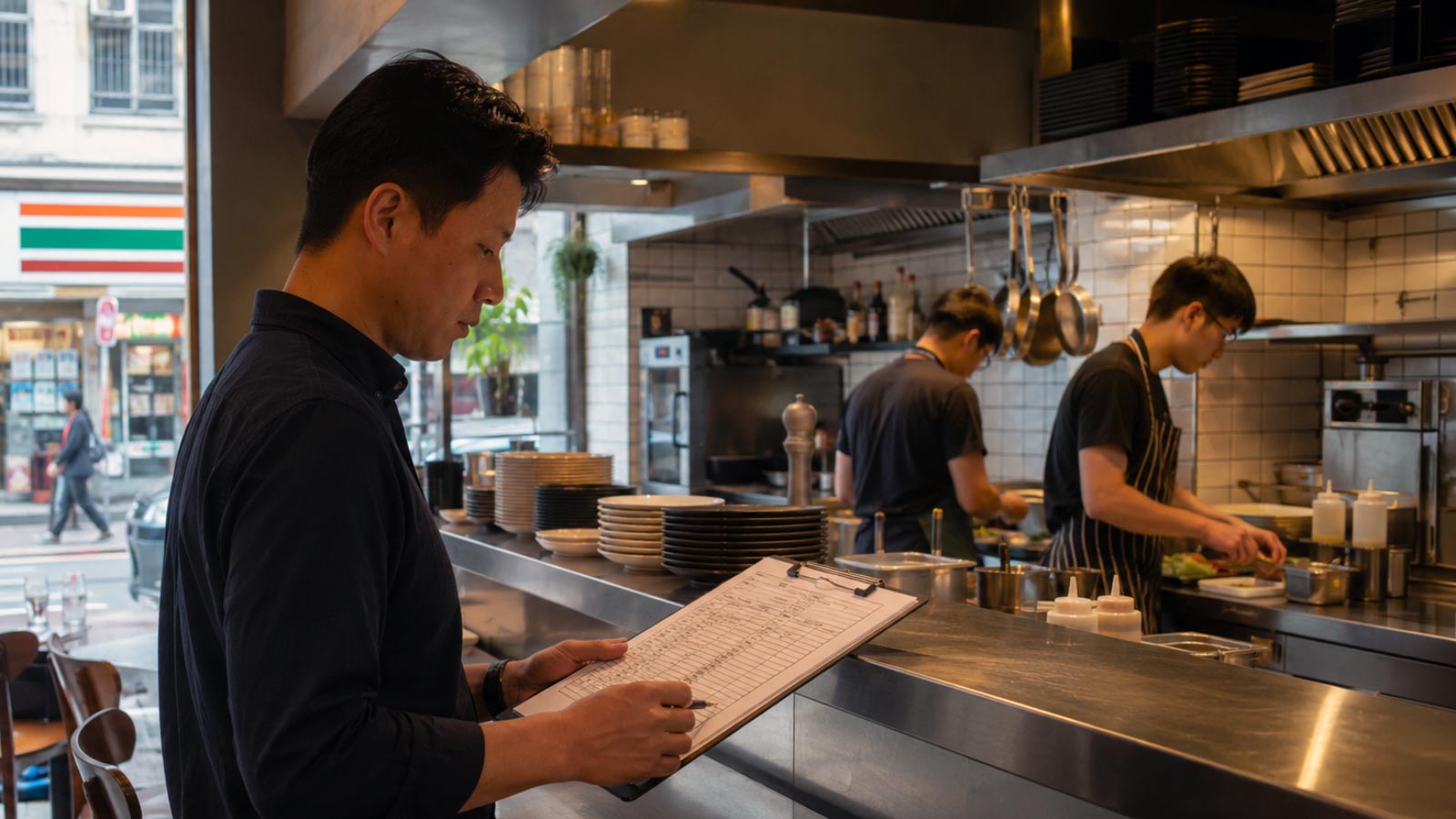
A bad hire costs far more than the salary. Replacing a key team member costs 30 to 170 per cent of their annual salary once recruitment fees, retraining, lost productivity, and operational disruption are counted. A head chef on HK$55,000 per month who does not work out can represent over HK$700,000 in total damage. The numbers make the case for slowing down and getting the hire right.
Danny Meyer’s 51% rule remains the most reliable hiring framework in hospitality. Hire 51 per cent for Hospitality Quotient – warmth, empathy, curiosity, work ethic, self-awareness – and 49 per cent for technical skill. You can train technique; you cannot train personality. But the rule only works when paired with the compensation baseline that makes culture possible.
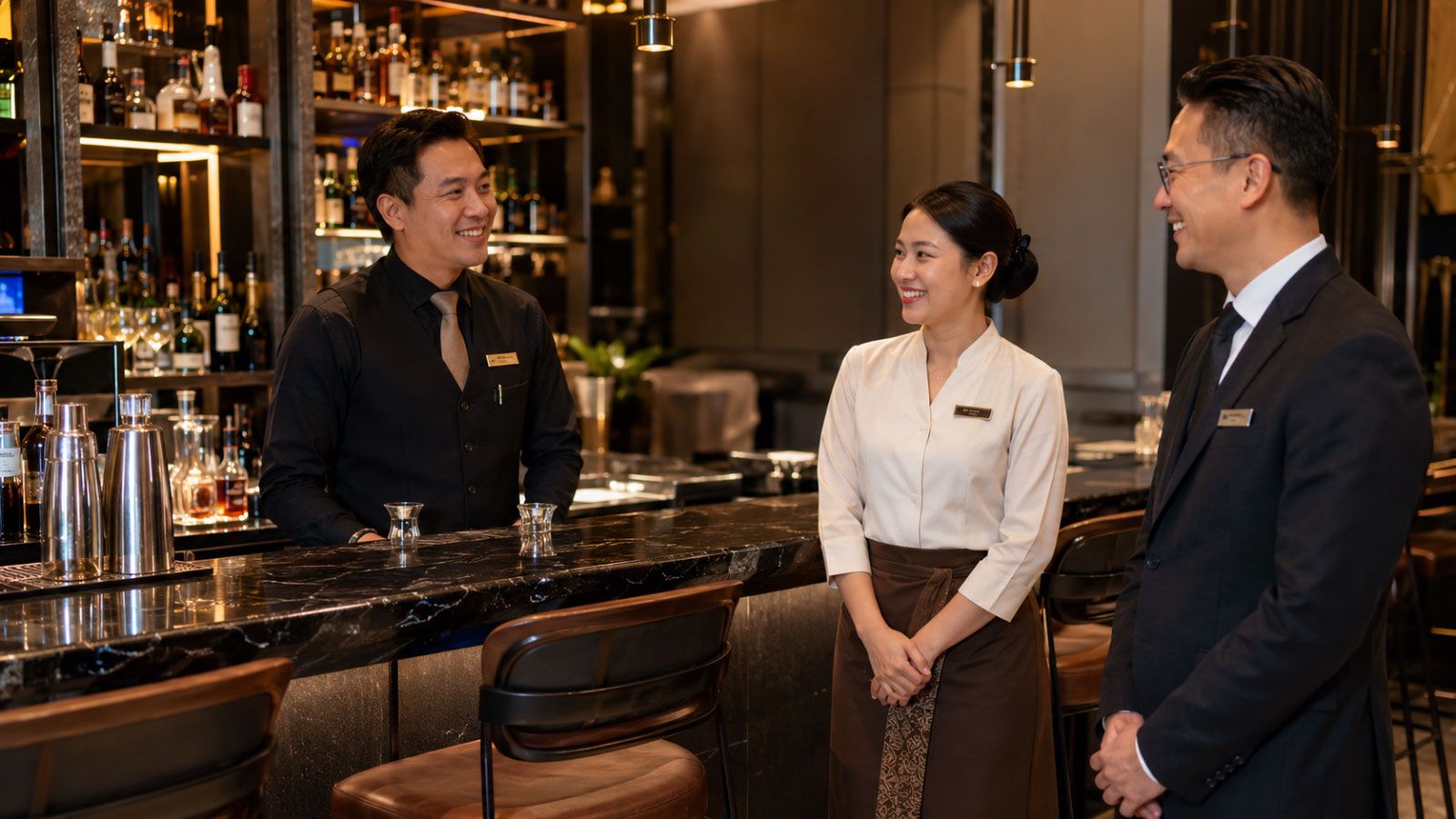
Culture is not an HR initiative. It is an operational system. The venues that get this right treat brand identity as an internal compass, not a marketing exercise. When the brand lives inside the team’s daily decisions rather than only in the collateral, it sustains service consistency without requiring a manager at every table.
The venues that treat culture as a system outperform those that treat it as a vibe. Pre-shift briefings, transparent knowledge sharing, and the discipline of praising publicly whilst correcting privately are not soft skills. They are operational mechanisms as measurable and repeatable as menu costing or revenue management.
Four months before opening, a venue owner hired a head chef with an impeccable CV. The chef developed the menu, built supplier relationships, hired and trained the kitchen team, and shaped the identity of the food programme from the ground up. Three weeks after opening night, the chef resigned. The trigger was a single incident: the owner publicly contradicted a menu decision in front of the kitchen team. Within two months, the venue closed.
The food was never the problem. The chef had the CV, the network, and the skill. The venue did not have a culture that could hold the operation together. A technically excellent chef had been hired into an environment that made it impossible for them to do the job they were hired for – not because the chef was wrong, but because the culture around them was broken before service began.
This is the story hospitality keeps retelling, and the industry keeps drawing the wrong conclusion. It treats staffing as a recruitment problem: find better candidates, offer slightly more money, fill the rota. The data tells a different story. The crisis is not about finding people; it is about keeping them. The venues that keep them share a set of practices that have nothing to do with posting on more job boards.
The Cost of Getting It Wrong
The numbers are stark. The UK hospitality sector carries over 170,000 vacancies at any given time, 48 per cent above pre-pandemic levels. Annual turnover runs between 67 and 74 per cent. Hong Kong’s food and beverage sector tracks a similar pattern, with operators routinely budgeting for complete team replacement within eighteen months. This is not a labour shortage. It is a retention failure at scale.
The cost of each mis-hire compounds quickly. Industry research places the total cost of replacing a key role at 30 to 170 per cent of that person’s annual salary – the range widening with seniority and operational centrality. A head chef earning HK$55,000 per month who does not work out costs the venue between HK$198,000 and HK$1,122,000 once recruitment fees, retraining, lost supplier relationships, menu instability, and the leadership vacuum are accounted for. General manager replacement averages around HK$108,000 in direct costs alone, before the weeks of diminished service quality that follow.
Low pay explains 30 to 40 per cent of departures. That is significant, and no discussion of retention can sidestep compensation. But it also means that the majority of people who leave do so for reasons that are not primarily about money: career progression, unpredictable scheduling, management quality. The venues running sub-40 per cent annual turnover are not necessarily the highest-paying in their market. They are the ones that pay fairly and build belonging. Compensation is the hygiene factor. Below a certain threshold, no amount of culture compensates for inadequate pay. Above that threshold, culture becomes the decisive variable in whether people stay.
The 51% Rule and What It Actually Means
Danny Meyer codified a principle twenty years ago that remains the most reliable hiring framework in hospitality. Hire 51 per cent for Hospitality Quotient – warmth, empathy, work ethic, curiosity, self-awareness – and 49 per cent for technical skill. The logic is straightforward: you can train a server to carry three plates. You cannot train them to care about the person sitting at table twelve.
This does not mean technical skill is irrelevant. A sommelier still needs to know wine. A pastry chef still needs to temper chocolate. The framework shifts the weighting, not the criteria. When two candidates are close on skill, the one with stronger interpersonal instincts will outperform the other within sixty days. A server with limited fine-dining experience but genuine curiosity will surpass a technically polished server who treats every guest as an interruption. The 51% rule does not lower the bar; it moves the bar to the quality that actually predicts performance.
The practical translation for interviews is deceptively simple. Replace at least one technical question with a scenario-based question that reveals how the candidate handles ambiguity, conflict, and the unexpected. ‘Tell me about a time a guest was upset and what you did’ produces more useful hiring data than ‘How many covers have you managed?’ The first question reveals character. The second reveals a number. Numbers can be checked on a CV; character can only be observed.
But the rule carries a condition that is often overlooked. It only works inside an environment that values the qualities it selects for. Hiring warm, curious, empathetic people into a venue where the management style is punitive and opaque does not produce a great team. It produces high-quality people who leave faster, because they have the self-awareness to recognise they deserve better. The rule is a hiring framework, not a culture strategy. It needs the rest of the system to land.
Brand as Culture: The Internal Compass
This is where most ‘hire for culture’ arguments stop. They tell you to hire nice people. They do not tell you what those people are supposed to orient towards once they are on the floor. The answer is the brand – not the brand as marketing understands it, but the brand as an internal decision-making tool that guides the team when no manager is watching.
The strongest examples share a pattern. A restaurant group rooted in a vanishing culinary tradition defines its culture as ‘what happens when management isn’t looking’. The founding story – a specific city, a disappearing café culture, a sense of loss worth preserving – is vivid enough that any team member facing an ambiguous service moment can ask ‘what would this tradition do?’ and arrive at a consistent answer without escalating. The brand story is not decoration. It is infrastructure.
Other operators achieve the same effect through internal language: a short phrase that captures the venue’s service tone, one that means nothing to a guest but everything to a team member calibrating formality, warmth, and pace. When that concept opens in a new city with an entirely new team, the internal language travels with it. The décor may be adapted and the produce sourced locally, but the service culture holds because the compass is portable. A casual dining group that builds named customer archetypes – each with specific communication preferences, visit occasions, and language they respond to – gives every team member a shared vocabulary for how the brand speaks, from the host stand to last orders. These are not marketing exercises. They are operational tools that produce consistency across shifts, locations, and turnover.
One hotel took the principle to its logical extreme. When its brand bible defined not just what the venue looked like but how it behaved – the service language, the attitude towards convention, the specific ways the brand broke hospitality norms – the recruitment team sourced front-of-house staff from creative subcultures rather than traditional hospitality channels. They found people who already embodied the brand and trained them to serve, rather than hiring servers and training them to fit the brand. Most venues do not need to recruit from unconventional channels. But every venue needs to answer the question that hotel answered: who are the people that naturally embody this brand, and where do they already exist?
A brand that lives only in the marketing department is decoration. A brand that lives in the team’s daily decisions is culture. Hiring for culture means hiring people who can absorb that internal compass and navigate by it without supervision.
The Daily Mechanisms
Culture does not maintain itself after the hiring decision. It is sustained through specific, repeatable practices that cost almost nothing to implement and compound over time. Three stand out.
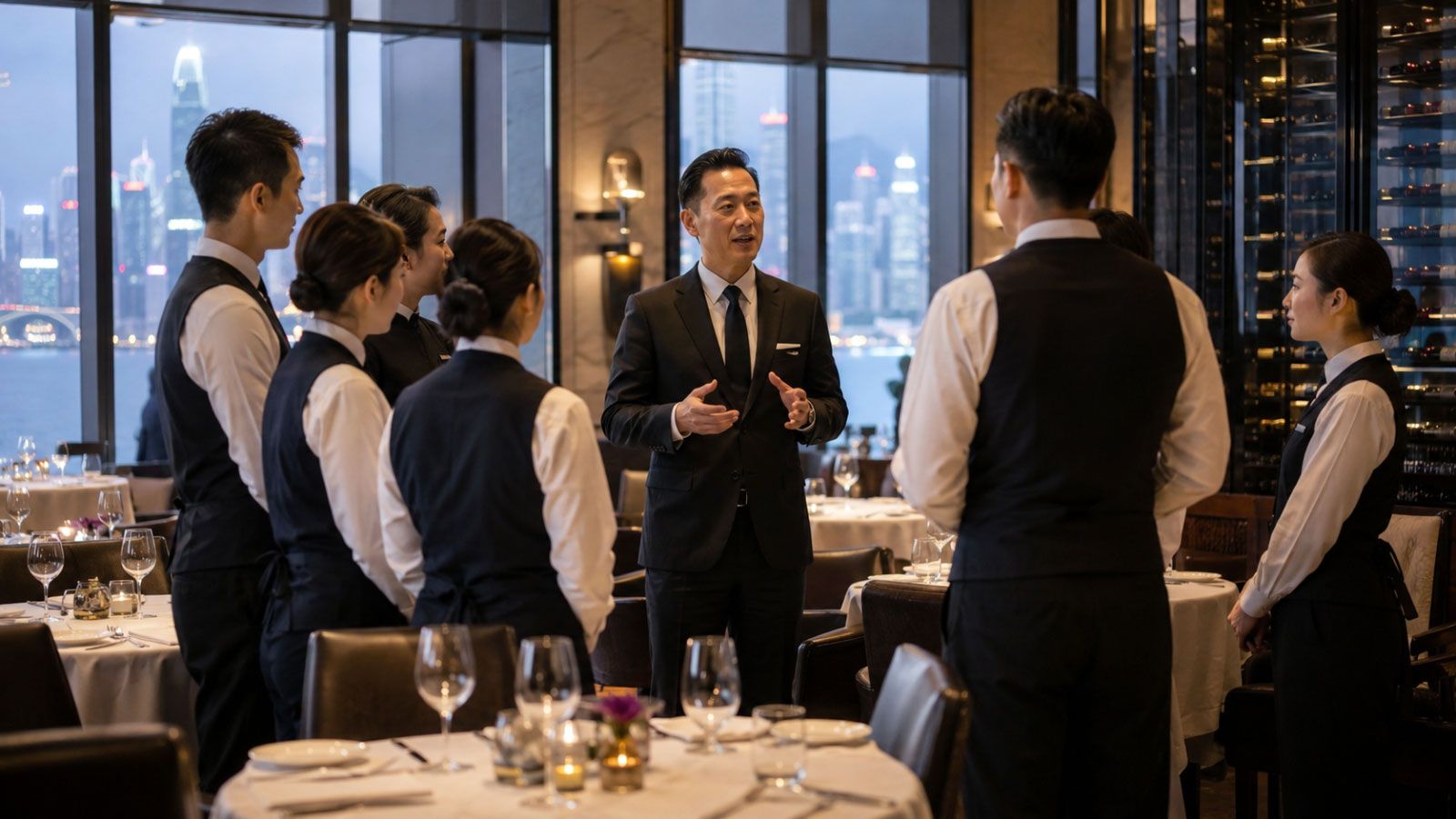
The first is the pre-shift briefing, a practice perfected by global luxury hotel groups and adaptable to any venue. Fifteen minutes, every shift. The shift leader covers today’s reservations, VIP notes, menu changes, one operational focus, and one piece of positive recognition. It takes less time than a cigarette break and does more for service consistency than any training manual. A 40-seat restaurant in Wan Chai can implement it tomorrow with zero budget. The mechanism works because it creates a daily rhythm of communication, expectation-setting, and acknowledgement that holds the team together shift by shift.
The second is a principle that sounds obvious until you watch it violated: praise publicly, correct privately. In a briefing, you recognise team members who did good work, who stepped up, who helped a colleague through a difficult service. When someone has not performed to the right standard, you pull them aside afterwards and speak to them directly. You explain what fell short, ask whether they need more training or support, and make it clear the goal is improvement. The manager who corrects publicly – who calls out mistakes in front of the team – creates a group that stops trying, stops thinking, and stops flagging problems. They do the minimum required to avoid attention. That is the opposite of a culture.
The third is the hardest for insecure managers: the willingness to develop your team beyond your own comfort. ‘I am not afraid of you learning my job’ is a phrase that separates leaders from supervisors. The manager who hoards knowledge to protect their position creates bottlenecks, breeds resentment, and produces a team that is dependent rather than capable. When that manager leaves – and they always leave – the operation collapses because nobody else knows how anything works. The manager who develops their team creates an operation that can survive their absence. That is leadership.
Why It All Connects
None of this is abstract. Eighty per cent of hospitality workers report experiencing mental health issues related to their work. Forty per cent of staff turnover is linked to mental health directly. These figures are not a sidebar to the retention conversation; they are the retention conversation. Protecting mental health in a venue is not about wellness posters in the break room or a meditation app subscription. It is about creating a team culture where people feel trusted, trained, supported, and given room to grow. Every mechanism in this article – the briefing, the private correction, the willingness to develop people – is also a mental health intervention, whether or not it is labelled as one.
A strong manager wants as many team members as possible to excel. That is not a threat to the manager’s position. That is the whole point of the position.
Return to the chef who resigned in week three. That chef did not leave because of money, hours, or a better offer. They left because the owner publicly destroyed their authority in front of the team, undoing four months of culture-building in a single moment. The venue closed not because it lost a chef. It closed because it never had a culture.
The 51% rule works. It has worked for twenty years and it will work for twenty more. But it works only when the 51 per cent – the warmth, the curiosity, the empathy – is met by an environment that protects those qualities. Hiring for culture is half the equation. Building the operation that lets culture survive is the other half. The venues that treat this as a system, as deliberate and measurable as menu engineering or revenue management, are the ones that will still be trading when the rest of the industry is writing another vacancy ad.
From the book
This article draws on material from The Shift Up: Open – The Complete Guide to Opening a Hospitality Venue by Marcus Treamer. Order your copy at maketheshiftup.com/open →
Building a team that stays starts with reaching the right candidates. Shift Happens connects Hong Kong hospitality venues with professionals who are actively looking for their next role and gives you the tools to evaluate cultural alignment alongside technical skill. Visit the employer platform to see how we can support your next hire.